Web Design Trends: What’s Shaping Modern Websites Right Now
Your website is often the first impression customers have of your business—so design matters. Today’s web design trends focus on creating experiences that feel modern, easy to navigate, visually engaging, and built to convert visitors into customers.
Whether you're planning a website refresh or creating your first site, here are some of the biggest web design trends influencing websites right now.
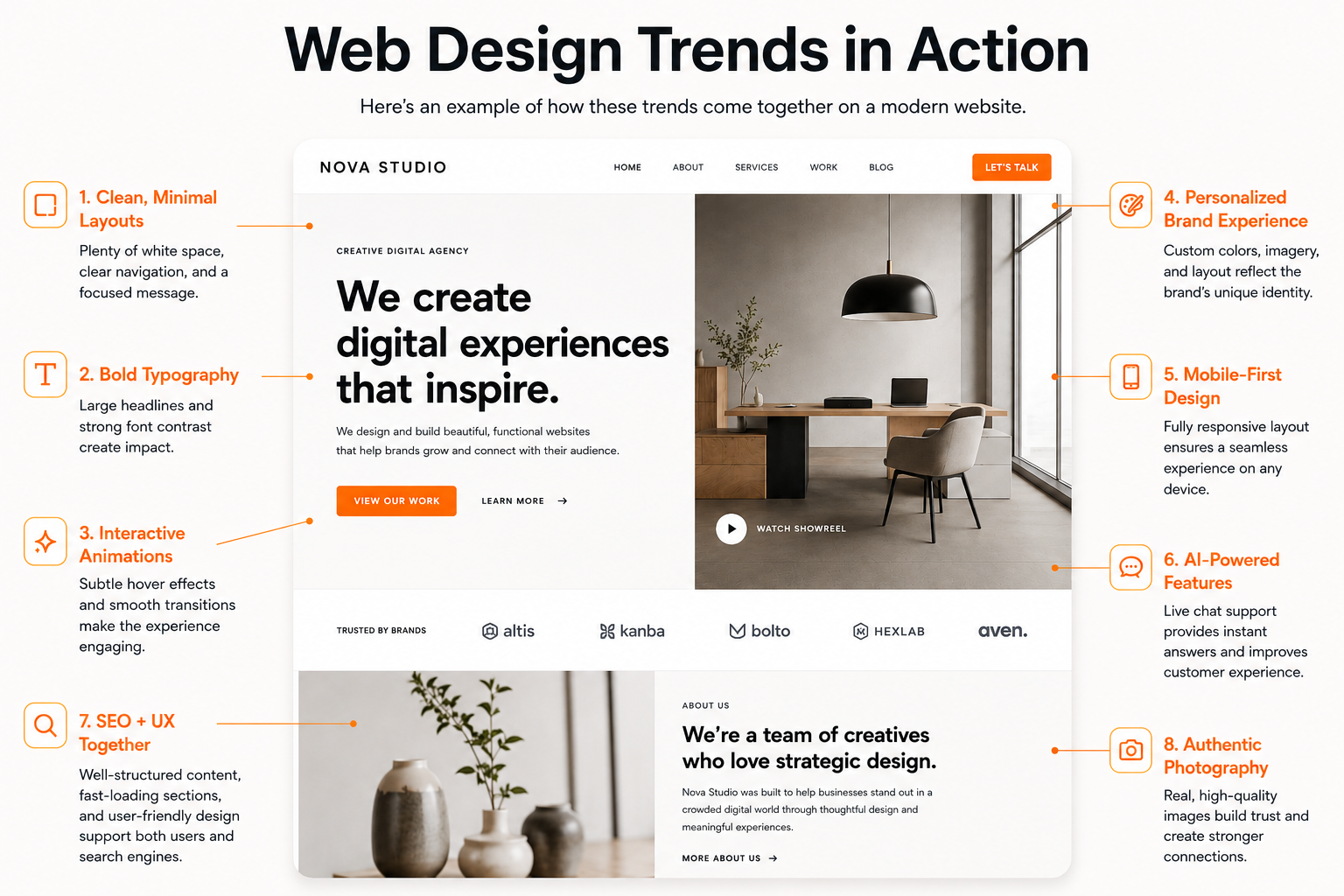
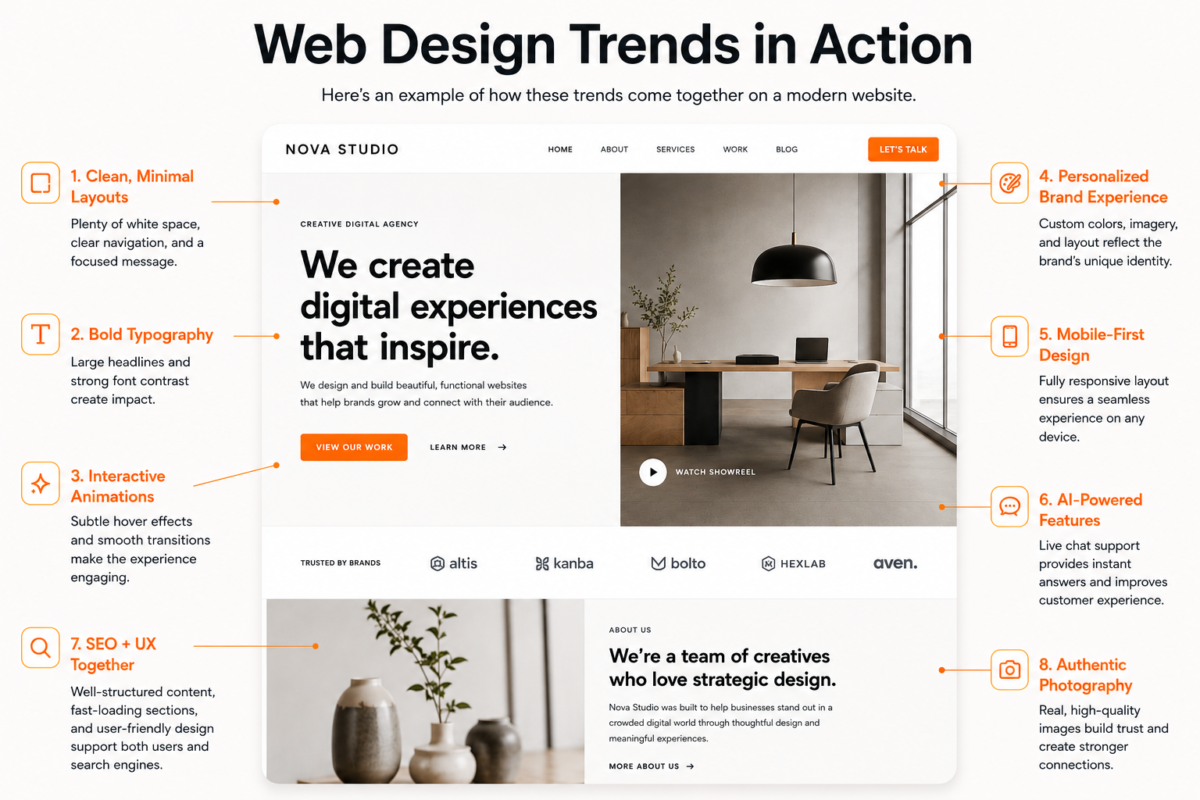
1. Clean, Minimal Layouts
Minimalism continues to dominate web design—and for good reason. Visitors want information quickly without visual clutter.
Modern websites are embracing:
- More white space
- Clear navigation
- Strong typography
- Fewer distractions
- Intentional content placement
A cleaner layout helps users focus on what matters most and improves overall user experience.
2. Bold Typography
Typography has become a design feature—not just a way to display text.
Large headlines, custom font pairings, and oversized text sections help brands create personality and communicate messages faster.
Popular typography trends include:
- Editorial-style headlines
- High contrast font combinations
- Large statement text
- Layered text effects
3. Personalized Brand Experiences
Templates are helpful starting points, but businesses are moving toward more customized websites that reflect their unique identity.
Brand-driven design includes:
- Custom color palettes
- Consistent visual storytelling
- Unique layouts
- Branded icons and graphics
- Personalized imagery
Strong branding helps visitors remember your business and builds trust.
4. Interactive Micro-Animations
Small movements throughout a website can make browsing feel more engaging.
Examples include:
- Hover effects
- Animated buttons
- Scroll transitions
- Loading interactions
- Subtle motion graphics
When used thoughtfully, animations guide attention without overwhelming the user.
5. Mobile-First Design
Mobile traffic continues to lead website visits, making mobile optimization essential.
Mobile-first websites focus on:
- Faster loading times
- Easy-to-tap buttons
- Simplified navigation
- Responsive layouts
- Readable text sizing
A great mobile experience also supports stronger search visibility.
6. AI-Powered Website Features
Artificial intelligence is becoming part of everyday website experiences.
Businesses are integrating:
- Chat support
- Personalized recommendations
- Smart forms
- Content assistance
- Automated scheduling
AI tools can improve efficiency while creating more helpful customer experiences.
7. SEO + User Experience Working Together
Beautiful websites still need to perform.
Modern web design now balances:
- Visual appeal
- Fast performance
- Accessibility
- Structured content
- Search optimization
Design decisions increasingly support both users and search engines.
8. Authentic Photography & Lifestyle Content
Brands are moving away from generic stock images and toward visuals that feel more personal and relatable.
Consider using:
- Behind-the-scenes imagery
- Team photos
- Custom brand photography
- Real customer experiences
- Lifestyle visuals
Authentic visuals help create stronger connections with visitors.
Looking Ahead
Web design trends continue to evolve, but one thing stays consistent: successful websites combine beautiful design with strategy and functionality.
The best websites don’t just look modern—they create memorable experiences, communicate clearly, and support business growth.
If your website feels outdated, small updates to layout, branding, speed, and user experience can make a noticeable difference.